
In the modern manufacturing landscape, the calculus of industrial success has shifted. It is no longer enough to possess cutting edge technological capability; true resilience is defined by the confidence of an industrial ecosystem, the visibility of its supply chains, and the strategic cultivation of its human capital.
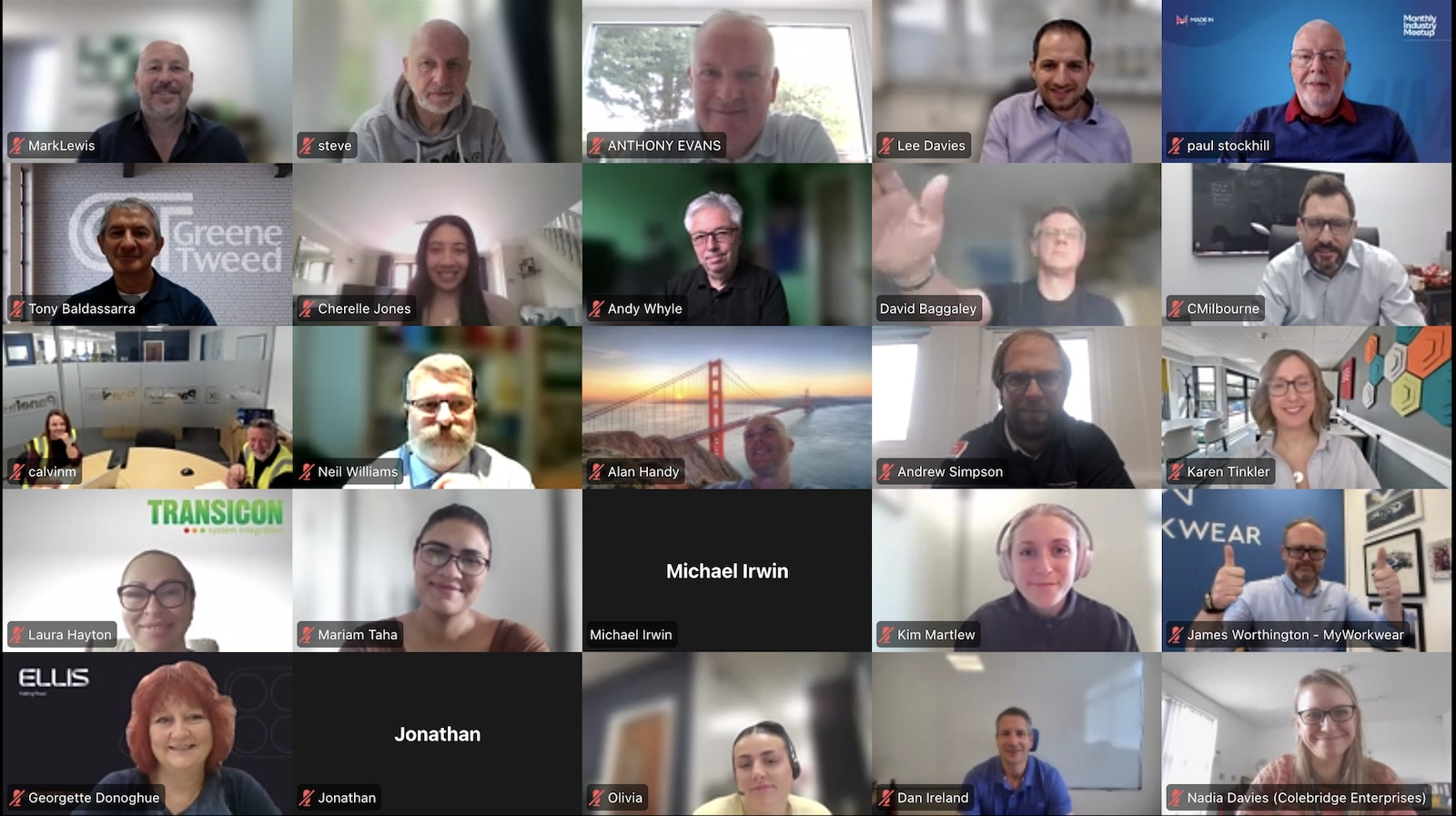
At the latest Made Community best practice session, industry leaders gathered virtually to dissect these foundational drivers. What emerged was a collective blueprint for navigating the macroeconomic landscape of 2026, focused heavily on the democratisation of supply chain data, the evolution of technical education, and the power of internal cultural transformations.
The New Calculus of Procurement: Supply Chain Sovereignty
The tone for the session was set by a critical examination of structural vulnerabilities within the UK industrial base. Drawing on the newly compiled Industrial Strategy Report, a sweeping survey of 249 industry participants that recently gained visibility in Parliament, Jason Pitt, CEO of Made in Group, highlighted a stark reality: an overwhelming majority of UK SMEs do not feel represented in current industrial policy. Furthermore, widespread anxiety persists regarding the ownership models of British industrial assets.
Historically, procurement operated as a strict cost-control mechanism, a function designed to chase the lowest marginal unit cost. Today, an era defined by unpredictable, structural "black swan" disruptions has permanently shattered that model.
"Procurement is no longer viewed strictly through the lens of cost savings," Pitt observed. "It is now fundamentally about security, resilience, the drastic shortening of supply chains, and active business protection."
To bridge this structural gap, the session highlighted the upcoming launch of Made Sovereign, a digital ecosystem designed to gamify and accelerate domestic reshoring. By allowing businesses to transparently map their operations and tap into a verified directory of UK suppliers, the platform aims to isolate supply chain risks. The platform streamlines B2B matchmaking at exhibitions, cuts through the noise of tire kickers, and integrates live feeds of government grants and tenders, all to foster a more localised, carbon-efficient, and self-reliant industrial network.
T Levels in 2026: Institutionalizing the Talent Pipeline
While securing material supply chains remains critical, solving the industry’s chronic skills deficit requires an equally sophisticated approach to human capital. Neil Davies, Head of Engineering at University College Birmingham (UCB), provided a comprehensive look at how manufacturers must engage with the emerging talent pipeline, specifically through the lens of the T Level qualification framework.
Equivalent to three traditional A Levels, these rigorous two-year technical programs for 16-to-19-year-olds represent a paradigm shift in technical education. Davies detailed a curriculum designed to blend theoretical engineering principles with practical execution, broken into three distinct pillars:
-
The Core Knowledge Base: 17 foundational units covering everything from mechanical and electrical principles to asset management and continuous improvement methodologies.
-
The Employer-Set Project: A 14-hour controlled assessment forcing students to formulate, budget, and pitch design solutions to a panel in a high-stakes, real-world format.
-
The Occupational Specialism: A grueling 33-hour practical fabrication, prototyping, and commissioning assessment.
Crucially, the defining feature of the T Level is its mandatory 365-hour industry work placement. For employers balancing day-to-day SME operations with long-term workforce planning, Davies framed these hours not as an administrative burden, but as a risk-free, extended talent audition. By integrating these young learners into live environments, manufacturers can assess cultural fit, problem-solving capabilities, and soft skills before making formal apprenticeship commitments. As a regional T Level Ambassador alongside global advocates like Amazon, Davies urged the manufacturing community to actively join college employer boards to directly influence and shape future curricula.
Cultivating Continuous Improvement from Within
The final piece of the strategic blueprint focused on operational optimization. As manufacturers are continually squeezed to raise productivity, maintain stringent quality controls, and manage overheads, the temptation is often to look outward for expensive, specialized consultants. Amelia Wakeham, Continuous Improvement (CI) Manager at Teledyne Valeport, offered an alternative, internally driven approach.
Reflecting on her own professional progression from an administrative role into operational leadership, Wakeham argued that sustainable continuous improvement cannot be treated as an ad-hoc or external intervention. It must be institutionalized as business as usual.
"True capability doesn't grow overnight by handing people a framework," Wakeham explained. "It grows by shifting mindsets, encouraging teams to question legacy processes, and embedding problem-solving into daily routines like waste walks and root-cause analyses."
At Teledyne Valeport, this cultural shift is anchored by a commitment to robust, two-way communication. Recognizing that front-line workers are often best positioned to spot operational waste, the company instituted monthly, small-group forums designed to flatten traditional corporate hierarchies. Post-summer, this initiative will evolve into a dynamic new format allowing employees to directly challenge and interface with senior management, effectively removing bureaucratic delays to operational change. This is supported by an upcoming rollout of visual management screens across the factory floor, ensuring data transparency and closing the feedback loop so that employee driven ideas are tangibly recognised and executed.
The Road Ahead: Quality, Connection, and Action
The insights shared during the keynotes were further contextualized during peer-led roundtable discussions, including a dedicated session by the Marketing Sub-Group titled "The Website Reality Check." This discussion challenged SME manufacturers to look critically at their digital front doors, ensuring their real-world technical capabilities and commercial value propositions are accurately translated into modern online customer journeys.
Looking ahead, the Made Community announced several major milestones designed to maintain this momentum of connection and knowledge sharing, including:
-
Made in the Southwest Factory Tour (Pico, Devon): A behind-the-scenes look at specialist British model railway manufacturing and tool-room innovation.
-
Best Practice Site Visit (Greene Tweed, Nottingham - June 11): An exploration of advanced polymer manufacturing and structural transformation, highlighting their journey to becoming the first site in their global group to achieve ISO 14001 accreditation.
-
Autumn Expos (Made in the Midlands on Oct 8; Made in Yorkshire on Oct 15): Curated, highly focused exhibitions aimed at connecting hundreds of decision-makers, engineers, and industrial leaders dedicated to rebuilding domestic capability.
Concluding the session, a timeless truth from Plato was offered to summarize the path forward: “The beginning is the most important part of the work.” For the UK manufacturing sector, the trajectory of the future will be entirely dictated by the foundations laid today, by the skills we institutionalise, the local supply chains we fortify, and the internal talent we choose to back.